Essentials
Weather & Conditions
Weather here can change in minutes. The key is simple: check, prepare, and adjust your plan if you need to.
Weather here can change in minutes. The key is simple: check, prepare, and adjust your plan if you need to.
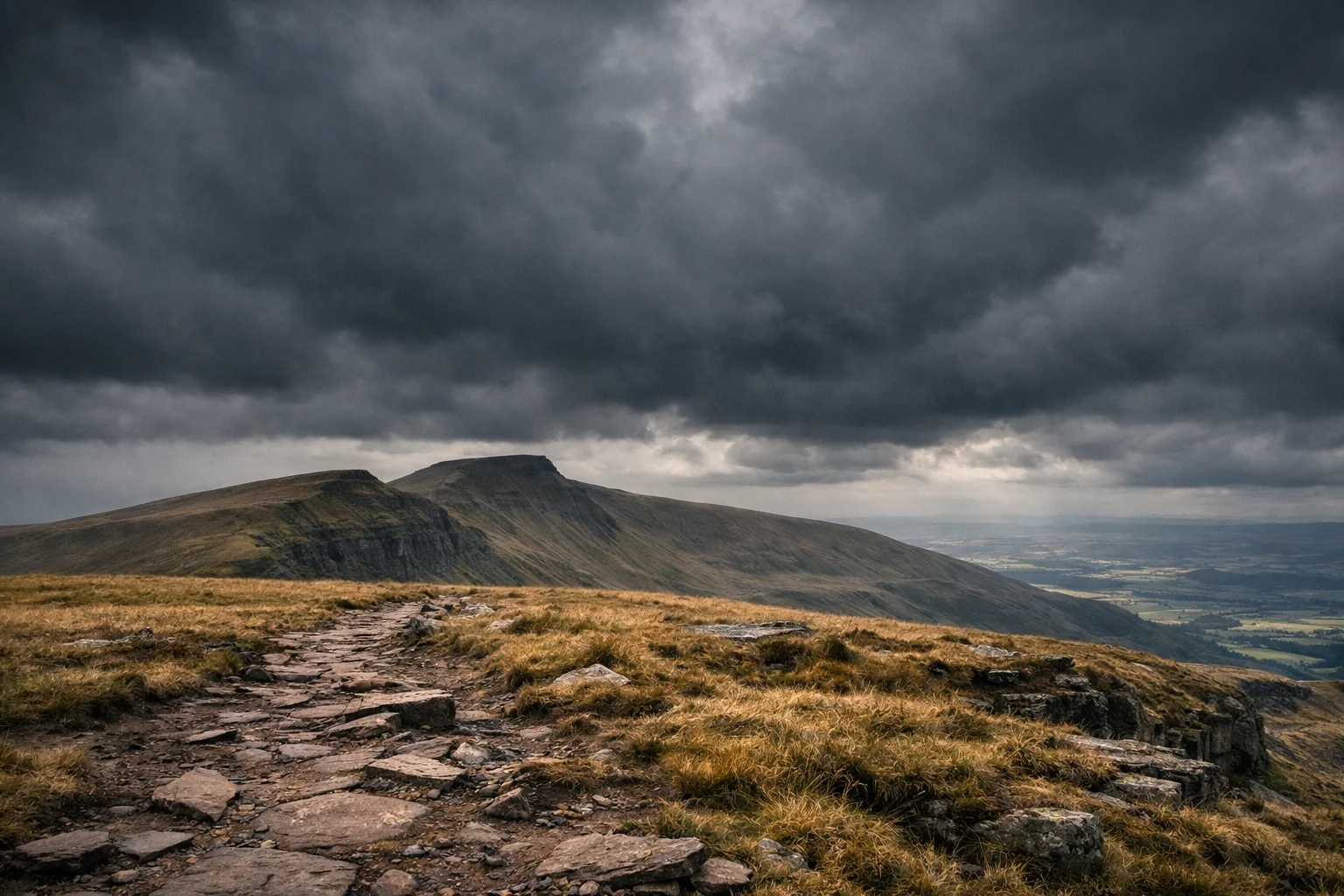
Weather in the Brecon Beacons can change fast — sometimes within minutes. A clear morning at the car park says very little about what the summit will be doing an hour later.
None of this needs to be complicated. Look at a mountain forecast rather than a town one, carry a waterproof and a warm layer regardless of what the sky looks like, and be willing to change the plan.
If you remember nothing else from this page, remember these.
Use a mountain-specific forecast, not a general one — and check again just before you leave the house.
Even on a “nice” day. It is always harsher on the mountain than it is at the car park.
The mountains are always there. Turning back is part of the plan, not a failure of it.
Go as planned — but still pack layers. Conditions on a summit can be nothing like the valley you set off from.
Shorten the route and avoid ridges. Exposed ground is where wind does the most damage to your day.
Stick to easy paths and avoid open ground. Navigation gets hard fast when the cloud is down.
Simple rule: it’s always harsher on the mountain than at the car park.
Check the forecast again just before you leave — a lot can change overnight. Start early, which gives you more flexibility and more daylight to play with. Have a shorter backup route in mind before you set off.
And don’t rely on phone signal. It’s patchy across most of the park, and cold weather drains a battery far faster than you expect.
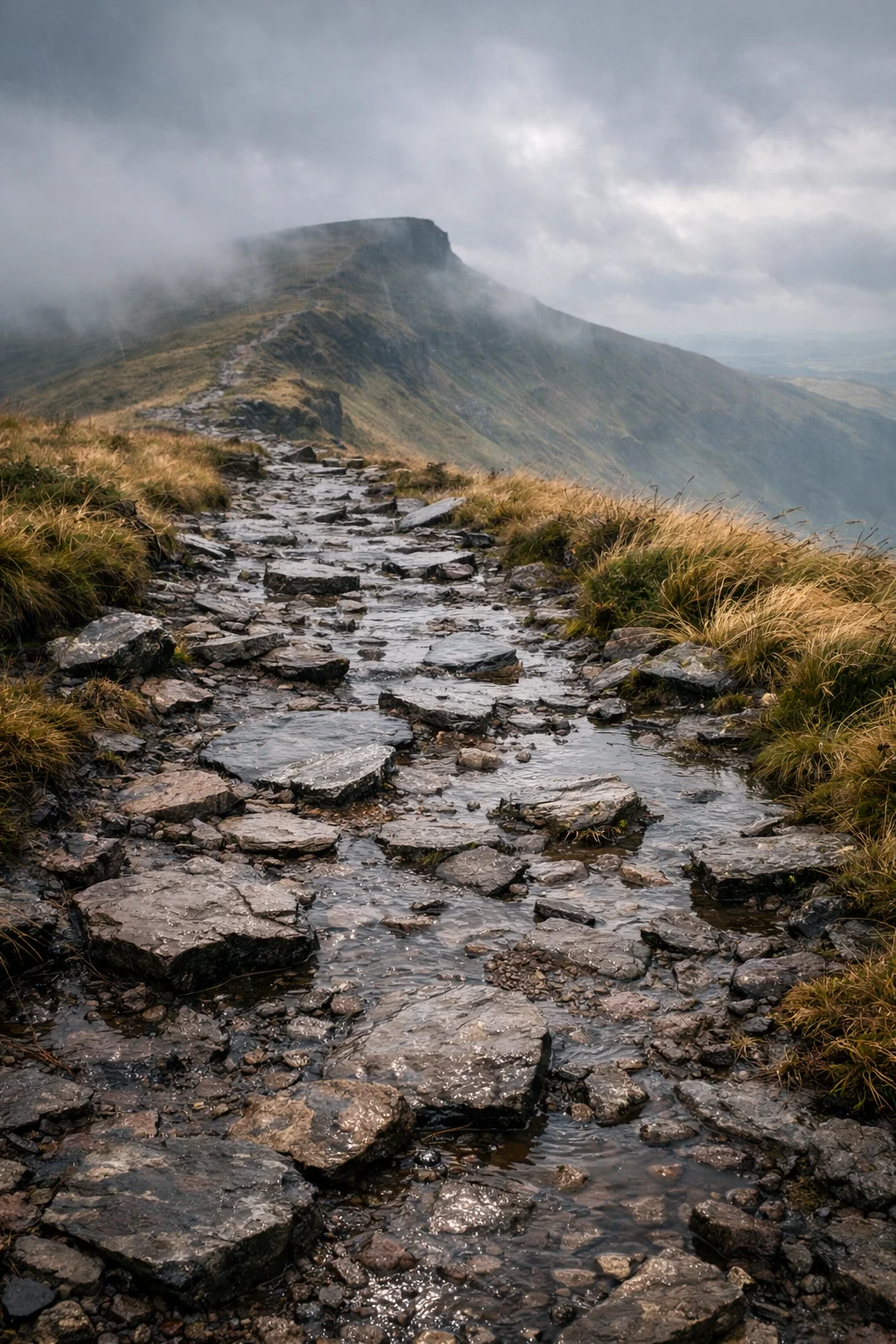
Keep it simple: check the forecast, pack for worse weather, and stay flexible. The mountains are always there — turning back is part of the plan.